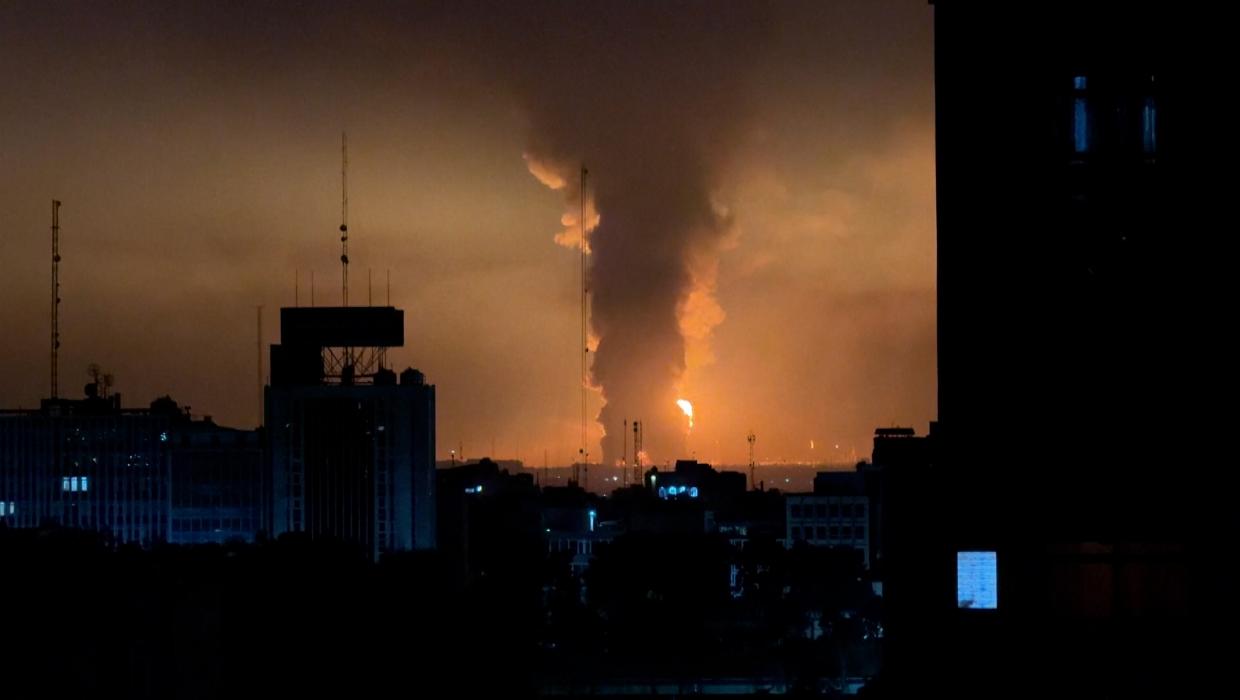
Lindsay and Craig Foreman said they had sheltered under beds as air strikes hit the capital, and said conditions in the notorious Evin jail were deteriorating badly.
Some air strikes were so close that their cell windows were blown out and plaster was knocked from the walls, they said.
Their guards fled the initial bombardment last weekend, and the prison is now under the control of Nopo, a US-sanctioned Iranian counter-terrorism unit notorious for killing unarmed women and children with heavy machine guns.
Mr Foreman, 52, and his 53-year-old wife, from East Sussex, were jailed for 10 years in February on spurious spying charges after being arrested in January 2025 while travelling through Iran on a round-the-world motorcycle journey.
They were among thousands of inmates at Evin sent into a “blind panic” when the first US and Israeli planes flew over last weekend.
Mrs Foreman’s son, Joe Bennett, 31, says the prisoners are surviving on a diet of rice and gristle, and no longer have access to fruit and vegetables after Nopo closed the prison shop.
“I am waiting for a call every day, minute-by-minute, just to know they are still alive,” Mr Bennett told The Telegraph.

“Sometimes it comes, sometimes it doesn’t,” he added. “On Saturday, my mum was just swearing down the phone. I didn’t know what was happening.
“I could hear screams and people scrambling for cover. Then the line cut. I was thinking what the hell is going on? It was mass panic. I thought that was it.”
He received a phone call three hours later from Mr Foreman, a carpenter, to tell him the war had started.
“He told me a missile had landed less than a mile away from the prison and knocked his cell window out,” Mr Bennett continued.
The couple, who are housed separately in the prison, said the strikes had become more intense since Saturday. “It could happen any time,” Mr Bennett. “They are in a war zone. They are not safe.”
Evin prison, Iran’s most notorious jail, has been used to imprison writers, poets, academics and dissidents for longer than 40 years.
In 2022, Nazanin Zaghari-Ratcliffe, a charity worker who holds dual Iranian and British nationality, was released after spending six years inside Iranian prisons including Evin. She was arrested on spying charges while visiting her family in Iran.
The prison was struck by an Israeli missile during the 12-day war in June 2025, killing dozens of inmates, visiting relatives and staff.
Iranian human rights groups warn that volatile periods in Iran often lead to harsher treatment of political prisoners.
“The risk of repression and retaliation against political prisoners increases during times of severe political or military tension,” said Dadban, an NGO which helps Iranian detainees.
Son appeals to Trump for help
Dismayed by Britain’s lack of action in getting his mother released, Mr Bennett appealed to Donald Trump, the US president.
“Donald Trump is a father and he has a family. I am sure he loves them deeply. And that is the reason I appeal to him to help us get them out,” he said.
“My mum and Craig are just innocent people caught up in an absolute mess. All I can hope is that they are safe and are released soon.”
On their way to Australia, Mrs Foreman, a life coach with a doctorate in psychology, was carrying out a research project asking people what constituted a “good life”.
On Dec 30 2024, she posted a map of Iran, saying they were about to face “one of the most challenging – and let’s be honest, slightly scary – sections of our journey: Iran and Pakistan”.
The next day, the couple crossed into Iran, aiming to reach Pakistan by Jan 4 2025, despite the advice of friends, family and the Foreign Office.
But they never made it. Mrs Foreman’s last social media post on Jan 3 was a picture of her meeting a “kind and thoughtful mullah” in Isfahan, central Iran.
On Feb 13, Iranian state media published a photo of the couple alongside Hugo Shorter, the British ambassador, announcing they had been charged with espionage.