The Nobel economics laureate Professor Paul Krugman this week described the recent bitcoin collapse as a “Fimbulwinter”, a cataclysmic three-year winter in Norse mythology that immediately precedes the endtimes known as Ragnarök.
It’s a colourful description of the staggering losses bitcoin investors have suffered over the last few months, but it also poses a question about whether this is the beginning of the end for the divisive cryptocurrency.
In the past four months, the value of bitcoin has halved – punctuated by a 12.6% drop earlier this week, the largest slide we’ve seen since November 2022.
The bitcoin price has stabilised in recent days, but the price is still at its weakest level since the crypto president Donald Trump first took office for his second term.
To put this into perspective, the NFL player Odell Beckham converted his entire salary of $750,000 (NZ$1.24 million) into bitcoin in November 2021 at a time when the cryptocurrency was valued at US$64,000 (NZ$105,000).
The idea was that this would be a solid investment that would grow over time, turning that $750,000 into a far bigger amount.

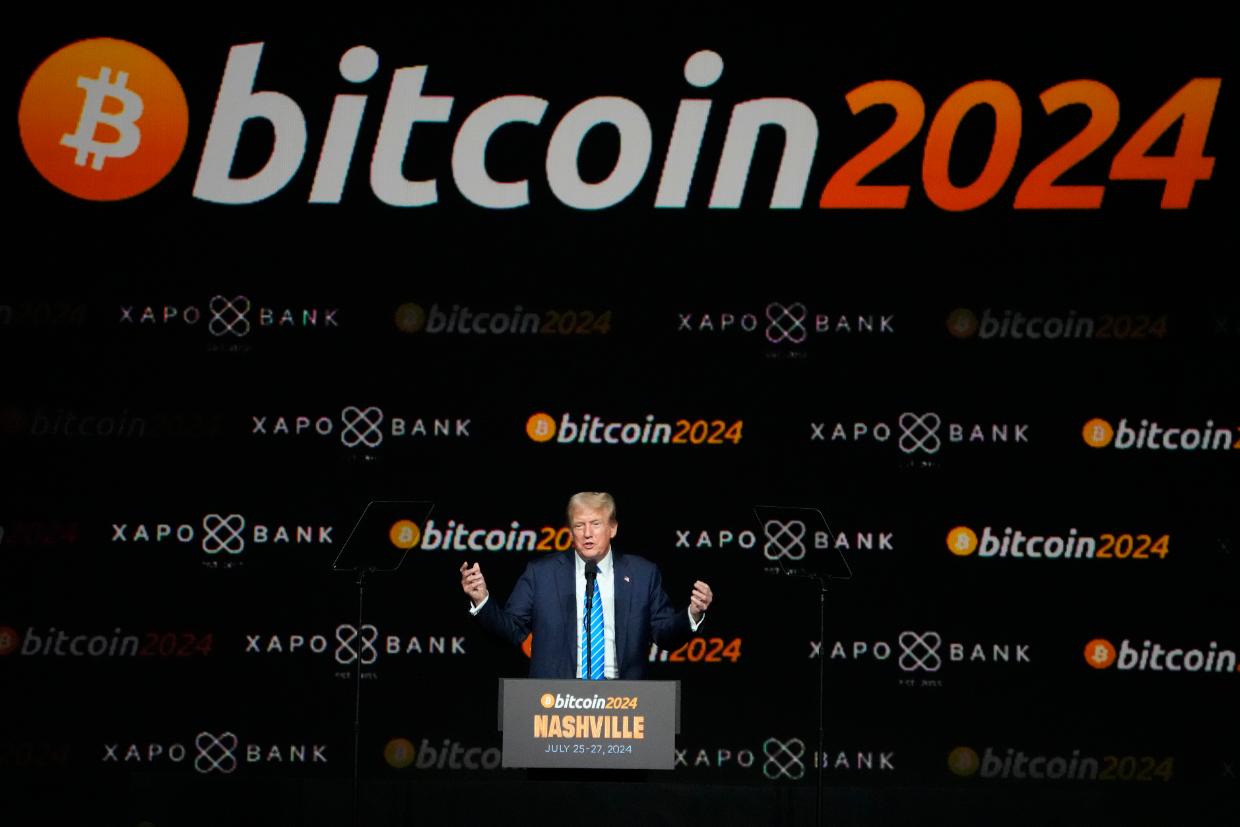
Bitoin. Not really a coin. Photo: Rick Bowmer / AP
There have been moments where that has been the case, but, based on the pricing at the time of writing, his initial investment would only be worth about US$820,000 today (a gain of roughly 10%). Bear in mind that the cumulative inflation over this period was around 16.6%, which means Beckham would need the value to be at around US$874,500, just to be on equal footing in terms of the buying power he initially had. What this means is that he’s actually worse off today.
Setting inflation aside, a 10% gain might not sound too bad. But that argument quickly falls to pieces when you consider that putting the same investment into the S&P500 would have turned the money into US$1.12 million (a 49% gain).
The thought experiment becomes even more one-sided when you extend it to individual stocks. If Beckham had put that salary into Nvidia stock, it would be worth US$4.37 million today (a gain of 482%).
The point here is that bitcoin is essentially a bet that the price of one thing will go up, and having too many eggs in that basket can turn into a yolky mess when it all comes crashing down.
Washing out the gamblers
The decentralised nature of cryptocurrency makes it difficult to ascertain the exact spread, but studies have shown that between 8.6% to 10% of Kiwis currently own cryptocurrency. This equates to roughly 300,000 to 500,000 active users in this country.
A 2025 IRD report revealed the New Zealanders traded $7.2 billion in cryptocurrency between June 2024 and June 2025 just on local platforms.
This captures only a small portion of the market, given the IRD estimates that 80% of trading still occurs on overseas exchanges.
When cryptocurrency markets dive, the impact on local investors can be enormous.
Jeremy Sullivan, an investment adviser at Hamilton Hindin Greene, tells me bitcoin has moved from a period of “violent liquidation” to what he calls a “solvency stress test”.
Most New Zealanders will be putting their own hard-earned money into cryptocurrency assets, but this isn’t the case for everyone.
Many investors in the crypto sector around the world trade with leverage (borrowed money). This is best explained through the example of an investor who might use $1000 of their own money to bet $10,000 on bitcoin by loaning the difference. If the price of bitcoin then drops even 10%, the initial $1000 investment disappears.
What happens next is automated selling, which is triggered the moment the price of an investment reaches a certain level.

This essentially creates a domino effect, whereby one person’s sale triggers a price drop, which triggers the next forced sale. It’s basically a case of the robots taking over and washing out the gamblers.
Sullivan says the price is now stabilising because we’ve reached the point of the market stabilising as those heavily leveraged buyers have been removed.
Where to next for cryptocurrency?
The question hanging over bitcoin now is whether this is the ‘Fimbulwinter’ or just another example of the volatility that comes with investing in cryptocurrency.
“Crypto has a high survival rate,” says Sullivan, pointing to previous examples where bitcoin has pushed through big drops in the price.
“The real question is whether the next leg up is built on organic participation or just another layer of leverage.”
This is where Krugman’s thoughts are important.
Whereas bitcoin has previously bounced back from big declines because people maintained faith in the thinking behind it, Krugman recently told Bloomberg the circumstances are quite different this time.
Krugman says the rise in bitcoin last year wasn’t driven by the promise of a decentralised currency or the future utility of bitcoin but rather by cryptocurrency hoarders (those who are stockpiling crypto) and the politics of the US administration.
“It’s sort of tied to what you think Trump’s future prospects are,” Krugman said.
“I don’t think [bitcoin] would have got up to US$125,000 without his election.”

Krugman sees this as a important reckoning for all the assumptions people have made about what cryptocurrency is supposed to do one day.
After 18 years in circulation, it remains too volatile to function as a legitimate currency. It has, furthermore, not become the new gold (the old metal has retained that position). Its decentralised independence is being challenged by politicians. And there are even concerns now that quantum computing could make the security of bitcoin vulnerable in the future.
“It’s a big wake-up for people,” said Krugman.
“Maybe this isn’t going to be an enduring asset. When people do a price forecast on bitcoin, I always wonder what it’s based on because there are no earnings, no services, it’s just pure faith. But it does feel like we’re seeing a real crisis of faith right now.”
Bitcoin first emerged when consumers were using the second generation of the iPhone – and in all that time, the cryptocurrency hasn’t convincingly been to bring its initial promise to fruition. Patience and faith can only take investors so far.
What happens if bitcoin goes to zero?
Despite the chaos in the cryptocurrency market, New Zealanders can’t seem to get enough of it.
Eric Walkington, a sales trader at CMC Markets, tells me “interest is up a lot, even more so since the sell-off from its US$126,000 high.
“Like [Warren] Buffett says, if you like a steak at $50 then you will love it at $25,” observes Walkington.
“Essentially, if you see value in bitcoin, then it starts to look like a bargain when it hits US$65,000.”
Walkington says there’s still a significant cohort of New Zealand investors who are optimistic about where bitcoin could go, which will continue to drive purchasing behaviour.

But that optimism isn’t shared by everyone. Peter Schiff, the founder of Euro Pacific Asset Management and a long-time critic of cryptocurrency, has predicted bitcoin would eventually fade to zero and that over a hundred-year horizon no one would even remember it existed.
But does any of that matter?
Walkington argues that it probably matters far less than we realise right now.
“Bitcoin is the digital asset that started it all,” Walkington says.
“But will we use it for global transactions? Never. It’s inefficient and not designed for that. It was an idea that spawned a completely new asset class that is currently worth trillions. Will it be the remembered? Maybe, but who remembers the first currency of the ancient times? It’s the Mesopotamian shekel. Full confession: I had to google that.”
The point Walkington makes is that whether bitcoin survives or fails doesn’t matter quite as much as the impact it has had in terms of popularising digital currencies.
“I think we will keep down this road for many years and decades to come if not longer.”
And if you’re a bitcoin investor, it’s guaranteed to be white-knuckle ride down that bumpy road.
Do have bitcoin? Do you want bitcoin? Do you have a bitcoin question? Has the word bitcoin lost all meaning ‘cos we said it too much? Tell us in the comments below.