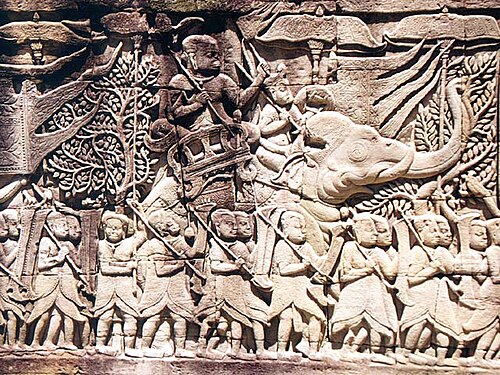
Khmer arts and culture, deeply rooted in centuries of tradition and heavily influenced by Hinduism and Buddhism, reached their zenith during the Angkor period. Key elements include intricate stone carvings at Angkor Wat, graceful Apsara classical dance, traditional music, silk weaving, and vibrant festivals like Khmer New Year.
Key Aspects of Khmer Culture:
- Architecture & Visual Arts: The most famous, the Angkor Wat temple complex, showcases advanced stone carvings and bas-reliefs. Traditional arts include lacquerware, ceramics, wood carving, and silversmithing.
- Performing Arts: Apsara dance is a classical,, slow-motion dance form that narrates stories through graceful gestures, often accompanied by pinpeat music. Shadow puppetry, known as Sbek Thom, is another traditional performance art.
- Traditional Crafts: Cambodia is known for its, high-quality silk weaving and specialized crafts like kite-making.
- Festivals & Traditions: The culture is deeply religious, with major celebrations including the Khmer New Year (April), Pchum Ben (Ancestors’ Day), and the Bon Om Touk (Water Festival).
- Cuisine: Khmer cuisine features distinct flavors using ingredients like lemongrass, fish sauce, and rice, with, dishes such as fish amok and lok lak.
Despite a decline during the late 20th-century conflicts, Cambodia is experiencing a major cultural revival, with traditional arts and crafts being revitalized.