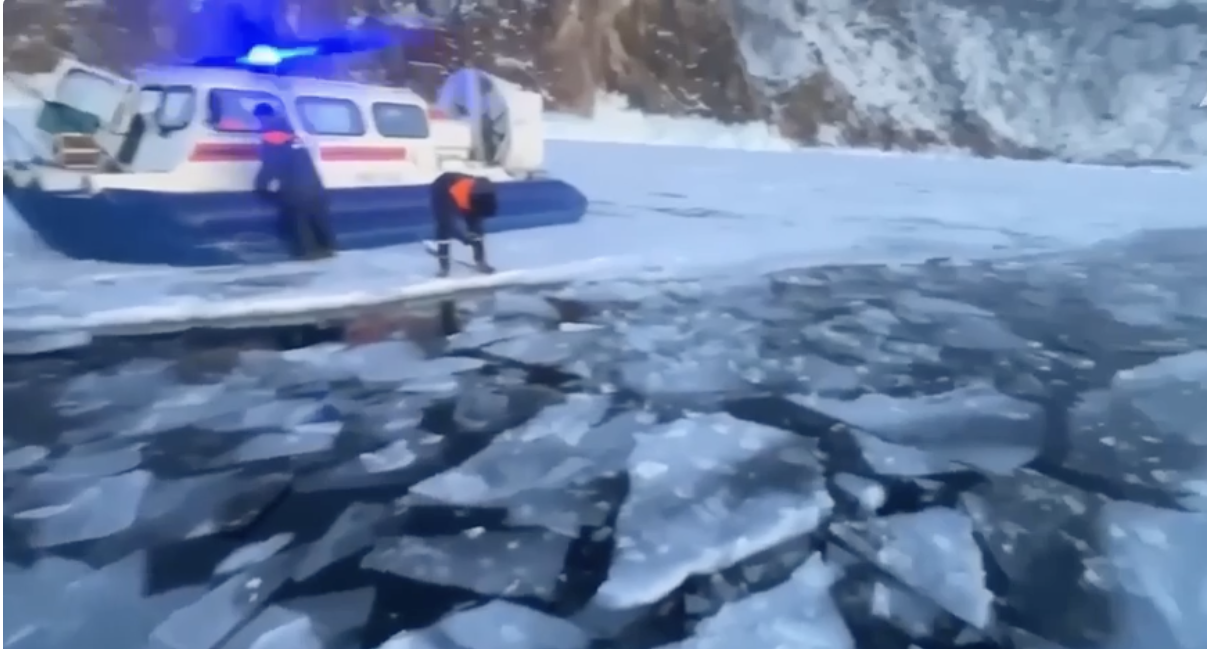
A sightseeing trip across one of the world’s most famous frozen lakes has ended in tragedy, after a mini-bus carrying tourists plunged beneath the ice of Lake Baikal in Russia’s Siberia region, killing eight people.
Russian officials confirmed divers recovered the bodies of seven Chinese tourists and a Russian driver from the lake after an extensive underwater search, BBC reported.
The vehicle sank to a depth of about 18 metres after falling into a wide ice fissure on Friday. According to BBC, one passenger managed to escape before the bus disappeared beneath the surface.
The recovery operation proved difficult, with divers relying on underwater cameras to locate the submerged vehicle in the icy waters.
Irkutsk regional Governor Igor Kobzev expressed his condolences to the victims’ families and warned the disaster should serve as a stark reminder of the risks.
Despite the lake’s frozen appearance during winter, authorities say travelling across its surface is currently prohibited due to unstable ice conditions.
Kobzev urged visitors to use authorised tour operators only, saying venturing onto the ice independently can be “mortally dangerous”.
“I would like to remind you once again that going out onto Lake Baikal’s ice is not just prohibited right now. It’s mortally dangerous,” he said.
Lake Baikal, the deepest lake on Earth at more than 1600 metres, attracts thousands of winter tourists each year drawn by its dramatic frozen landscapes.
However, shifting ice and hidden cracks have led to repeated accidents over the years.
Officials said the group had been travelling independently, and included a 14-year-old child among the victims.
A criminal investigation has been launched to establish how the vehicle came to be driving across the lake despite safety restrictions.
The governor later revealed that several other incidents unfolded over the same weekend, with six people rescued after becoming trapped in vehicles on the ice, suggesting warnings are still being ignored.
The latest deaths follow another fatal accident in January, when a tourist died after a vehicle overturned on the frozen surface, underscoring the continuing dangers posed by Lake Baikal’s winter conditions.