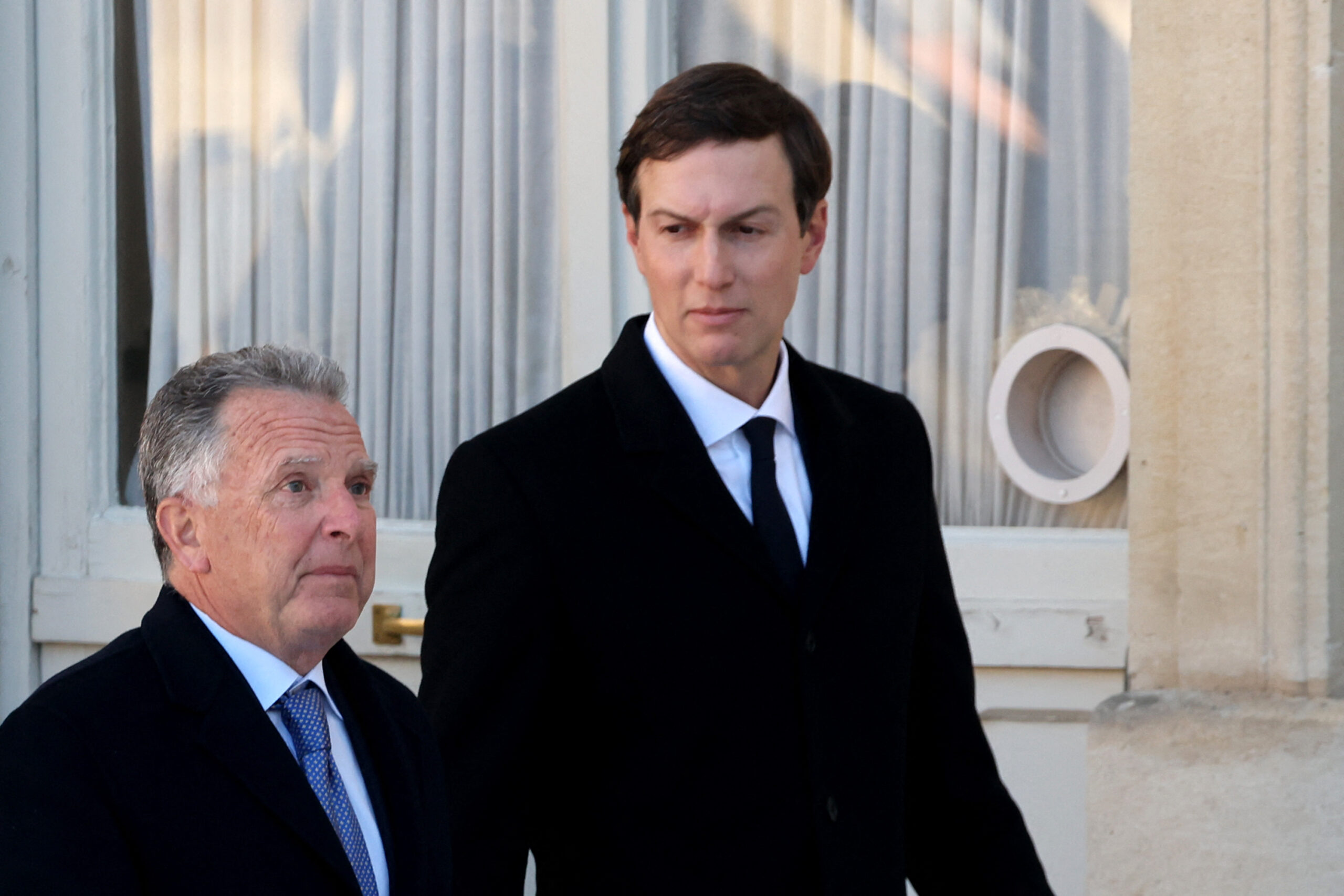
President Donald Trump on Saturday abruptly canceled a planned trip by special envoy Steve Witkoff and the president’s son-in-law Jared Kushner to Pakistan, pulling back from what had been billed just a day earlier as a potential jump-start to fragile Iran talks.
“I just cancelled the trip of my representatives going is [to] Islamabad, Pakistan, to meet with the Iranians,” the president wrote on Truth Social. “Too much time wasted on traveling, too much work! Besides which, there is tremendous infighting and confusion within their ‘leadership.’ Nobody knows who is in charge, including them. Also, we have all the cards, they have none! If they want to talk, all they have to do is call!!!”
The sudden reversal underscores the whiplash surrounding the administration’s diplomatic push in recent days — and Trump’s impatience with negotiations that aren’t quickly yielding results.
In a separate statement provided by the White House, Trump said the U.S. has “all the cards.”
“I’ve told my people a little while ago they were getting ready to leave, and I said, ‘Nope, you’re not making an 18 hour flight to go there,’” the president said. “We have all the cards. They can call us anytime they want, but you’re not going to be making any more 18 hour flights to sit around talking about nothing.”
It comes after Iran’s foreign minister, Abbas Araghchi, and his delegation left Islamabad after arriving Friday for talks with Pakistani leaders.
The trip to Islamabad had been assembled rapidly, with the White House on Friday signaling that Witkoff and Kushner would travel to Pakistan for indirect talks with Iranian officials, with Islamabad serving as an intermediary.
While speaking to reporters Saturday afternoon before boarding Air Force One in Florida, Trump said that Iran presented him with “a paper that should’ve been better,” adding that within 10 minutes of him canceling the trip, Tehran sent “a new paper that was much better.”
When asked what the new proposal contained, Trump said, “We talked about they will not have a nuclear weapon. Very simple. That whole deal is not complicated.”
The White House did not return requests for clarification on whether the president meant a new agreement was presented to him in which Iran would agree not to have nuclear weapons.
Vice President JD Vance was expected to join in Islamabad if the discussions showed signs of progress — a notable escalation after his own recent trip to Pakistan fizzled, with talks stalling over sequencing issues and neither side willing to make the first substantive concession.
That failed push has hung over the latest effort. Vance’s outreach had been aimed at converting a tenuous battlefield pause into something more durable, but it ended without even a framework for continued negotiations, underscoring how far apart Washington and Tehran remain.
The broader backdrop is a shaky ceasefire following weeks of U.S. strikes and Iranian retaliation — a pause that has held in practice but remains informal, with no written agreement, no verification mechanism and periodic flare-ups threatening to unravel it. Both sides have continued to signal openness to talks while simultaneously hardening their public positions, leaving intermediaries like Pakistan to carry much of the diplomatic load.
White House press secretary Karoline Leavitt said Friday that “we’ve certainly seen some progress from the Iranian side in the last couple of days.”
But the president’s cancellation Saturday signals a deal is far from being reached — and suggests the administration is again recalibrating after early diplomatic openings failed to produce quick results.